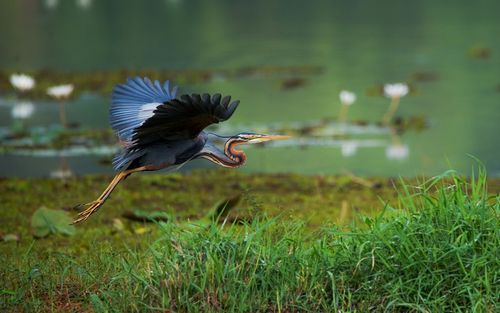
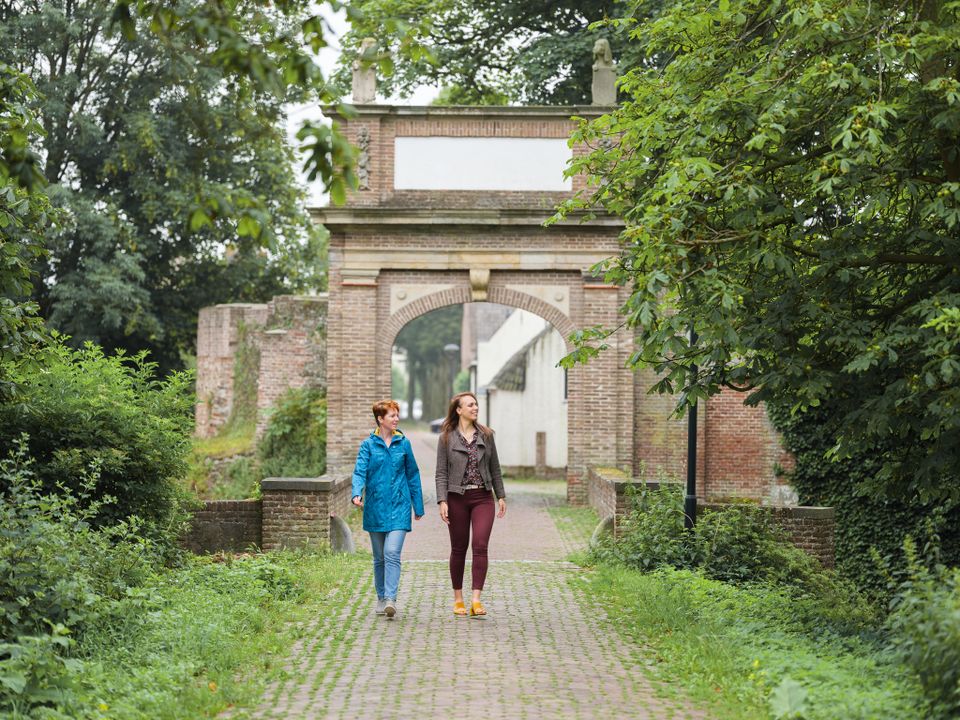
Walk from Vianen to the Zouweboezem, breeding ground of the purple heron, and back.
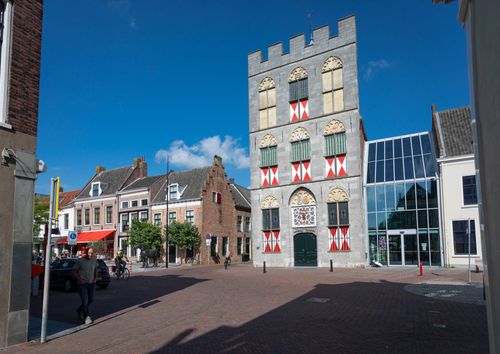
Originally, the town hall consisted of a spacious hall, the civic hall, which was also used as a market hall, with a smaller space at the rear of the building. From this smaller space, the town was governed and justice was administered.
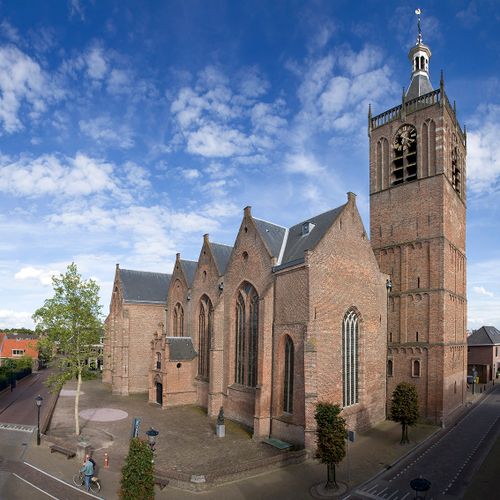
After a fire in the year 1540, the church (de Grote Kerk) was rebuilt in its current form almost immediately (as a combination of a hall church and cruciform church) with the support of Reinoud III van Brederode.
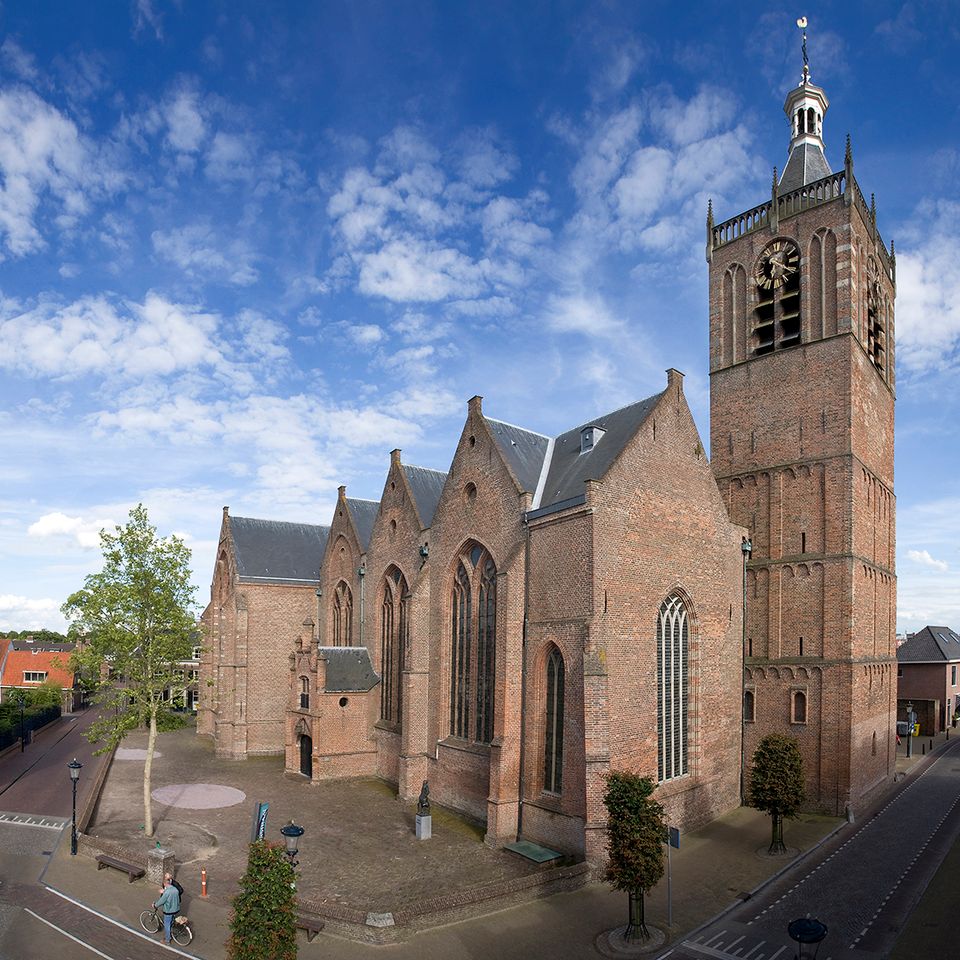
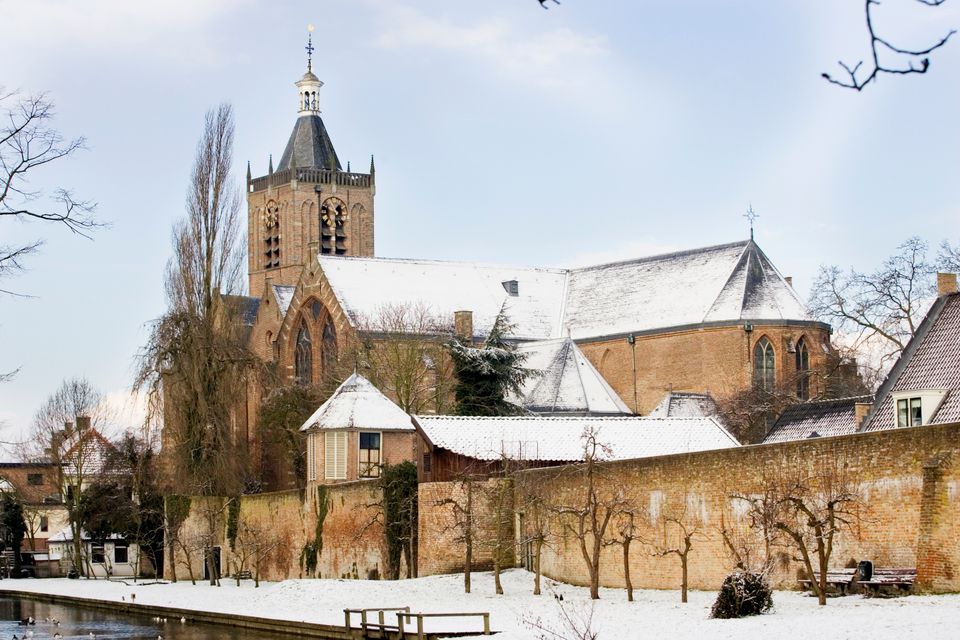
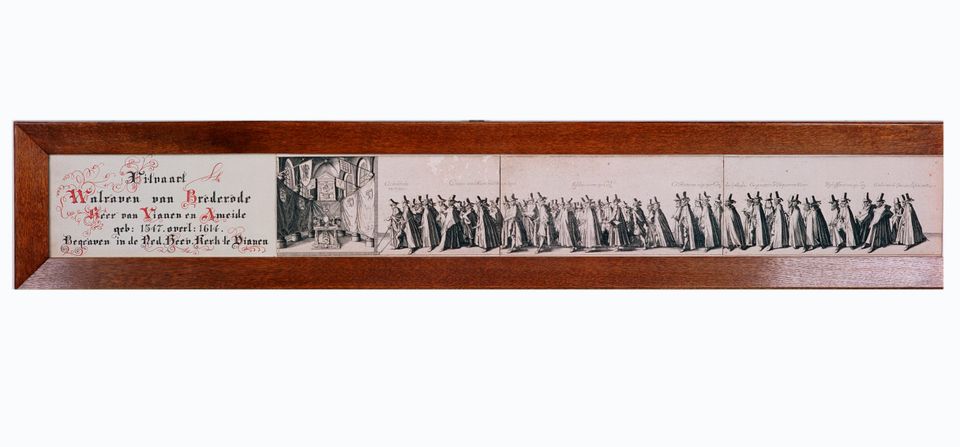
Hubrecht van Vianen founded a chapel in the 13th Century. It fell under the mother church in Hagestein and began growing fast. In the year 1345, it became a parish church and was granted marriage and burial rights. For this, a sum of money had to be paid to the church in Hagestein annually. In the 14th Century, the chapel was replaced by a single-nave church. In the year 1433, following a feud between Vianen and Hagestein, the Bishop of Utrecht decided to split the two churches.
In the mid-15th Century, the church was replaced by a 3-aisle Gothic hall church which is the same size as the current church. (Including the tower, it’s 77.5 metres long, 43 metres wide and 41 metres high.) Since the church also contains the family graves of the Lords of Vianen, it was required to match the grand status of the Brederodes in terms of its size and appearance.
After a fire in the year 1540, the church (de Grote Kerk) was rebuilt in its current form almost immediately (as a combination of a hall church and cruciform church) with the support of Reinoud III van Brederode. The church became Reformed under his son, Hendrik van Brederode. On 25 September 1566, the Roman Catholic institution disappeared and then, on 1 October, the first Protestant service was held.
Discover all monuments in Vianen.
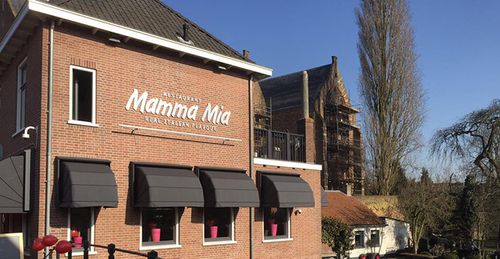
Want to taste pure Italy in the attractive restaurant, cozy back house or on the most beautiful terrace in Vianen? This is possible at Restaurant Mamma Mia.
An undiscovered gem, full of beautiful flora and fauna.
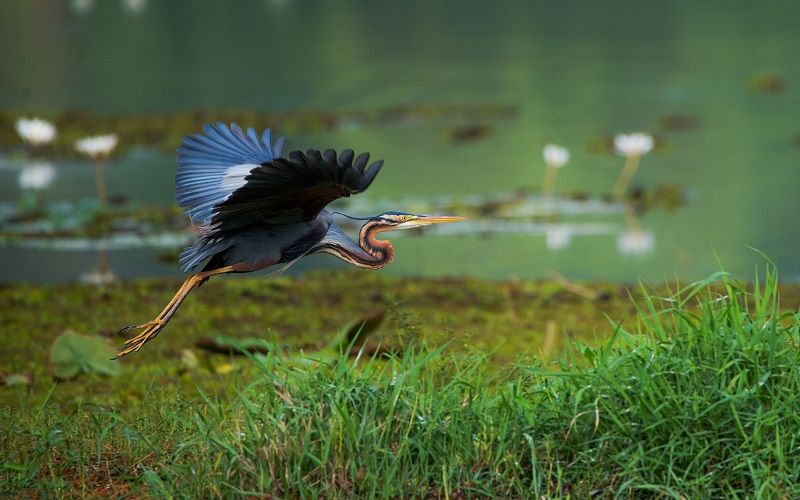
An undiscovered gem, full of beautiful flora and fauna. This storage area was dug in the 14th century to collect the excess water between the polders. Now it is an oasis of peace in which grasslands, reed beds and water alternate. Have your camera ready, because the swamp fields are the home and breeding ground for many bird species. The purple heron, the marsh harrier and the china grouse, you can admire them all.